
Fort Bend County Sex Offender Checks
The official starting point is the Texas Public Sex Offender Registry, maintained by the Texas Department of Public Safety. It combines records contributed by local registration authorities across Texas. Select Fort Bend in the county field for a countywide view, or search a name when a particular identity is known. A city or ZIP search can be more useful for a smaller area. The result should be treated as a lead to an official profile, not as a substitute for identity checks or local confirmation.
Registration is local even though the public search is statewide. A person who lives within a municipality normally registers with that city police department. The Fort Bend County Sheriff's Office handles the unincorporated county role. That split matters because a Sugar Land address and an address outside city limits may lead to different registration authorities. Call the relevant agency before visiting, since appointment sites and verification hours were not published as one fixed county schedule in the research.
Fort Bend County residents should also distinguish a registry profile from a court case. The registry records a statutory duty after a reportable conviction or adjudication. The underlying pleadings, judgment, and sentence remain with the court clerk. For the broader record path, the county’s court case lookup explains where felony and misdemeanor files are held.
Texas Public Sex Offender Registry Searches
The DPS interface offers name and geographic routes. Start with the narrowest facts you can verify. A spelling error can hide a name match, while a broad radius can produce results from nearby jurisdictions. The official Texas registry search screen shows the current controls used for a Fort Bend County search.
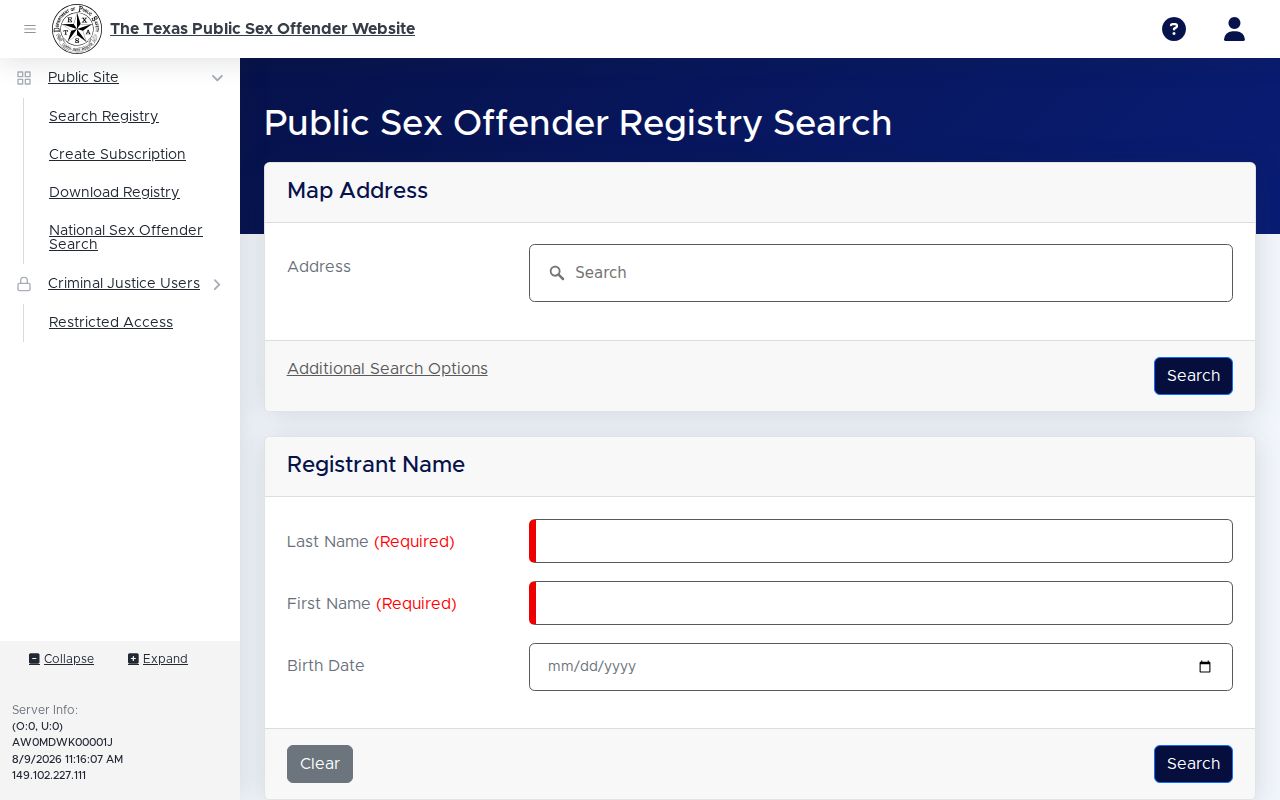
The captured interface helps readers recognize the government search before they enter a name or location.
- Open the DPS registry and read its conditions and accuracy notice.
- Choose a name search or a geographic search. Enter the matching name, address, city, ZIP code, or Fort Bend County filter.
- Set a radius only from the choices shown in the live portal. Do not assume a distance that the form does not offer.
- Open the likely profile and compare aliases, physical details, address, offense, status, and verification information before drawing a conclusion.
| Field Label | Type | Required | Notes |
|---|---|---|---|
| Last Name | Text | Conditional | Starts a name search; test spelling variants when appropriate |
| First Name | Text | Optional | Narrows a name result |
| Address | Text | Conditional | Street point for a geographic search |
| City or ZIP Code | Text or select | Conditional | Narrows the geographic area |
| County | Dropdown | Optional | Select Fort Bend for county results |
| Radius | Dropdown | Conditional | Use only distances displayed by the live portal |
| Search | Button | Not applicable | Returns a list and map where available |
Fort Bend Name or Address Search
A Fort Bend County name search works best when the reader already knows whom to check. Compare more than a name. Aliases, age, physical traits, and the reportable offense can help separate people with similar names. A geographic search answers a different question. It finds public profiles located around an address, within a city or ZIP code, or across Fort Bend County. The live radius choices control how far the map extends.
No result proves only that the chosen criteria did not return a current public match. It does not prove that no registration exists elsewhere, that no spelling variant is used, or that no recent address update is pending. Try a broader location, remove an optional first name, and check the official profile data. Then ask the correct local registration authority about a material conflict.
The results view can be recognized through the official DPS registry results interface, which presents public matches without serving as a complete criminal record.
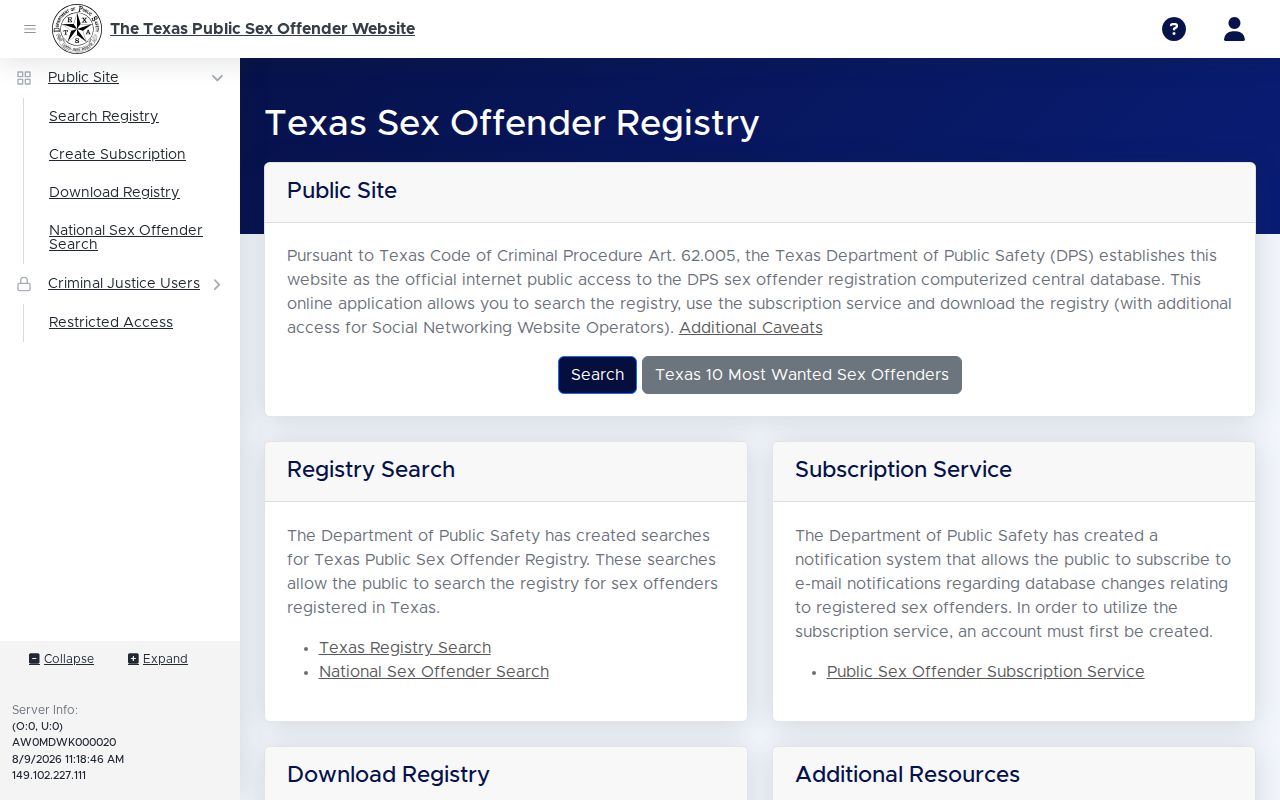
Readers should open the individual official profile and check its current status rather than rely on a map marker alone.
Note: A map location supports community awareness, but it does not authorize a visit, surveillance, contact, or any effort to test the listed address.
Registry Profiles: What They Show
A typical Texas profile ties identity and registration facts to the reportable offense. It can show a current photograph, aliases, physical descriptors, address or location, registration status, verification facts, risk level when assigned, and offense data. Vehicle or institution facts may also appear when public. These fields help a Fort Bend County reader compare the result with known facts, but none should be read in isolation.
| Name and Aliases | The reported primary name and other names used in the official record |
|---|---|
| Photo and Description | Current photograph when available, sex, race, age or birth date, height, weight, hair, eyes, and identifying marks |
| Registered Location | The public address or location information allowed by Chapter 62 |
| Offense and Statute | Reportable offense, legal citation, conviction or adjudication date, and jurisdiction |
| Risk Information | Low, moderate, or high numeric assessment when one is assigned and made public |
| Registration Status | Current duty and verification information shown by DPS |
| Other Public Facts | Scars, marks, tattoos, vehicle details, or institution data when the law permits publication |
The official Fort Bend County profile is still not a rap sheet. It does not replace the Fort Bend court judgment, and it does not list every contact a person has had with police. Use it for the narrow public-safety purpose the registry serves.
Fort Bend Registry Profile Limits
Texas Code of Criminal Procedure Article 62.005 describes the registry information available to the public and the information that remains protected. The public view excludes Social Security numbers, driver-license numbers, telephone numbers, employer names and contact details, and facts that identify a victim. Those omissions are safeguards, not signs that the profile is defective.
The offense portion may describe victim age and sex as categories where lawful, but it must not identify the victim. Annual driver-license or identification photographs can be added when available. A profile may also omit material that is confidential because of juvenile treatment, a court order, or another statute. Fort Bend County users should not try to reconstruct protected data from other sources.
This boundary also explains why a Fort Bend County registry profile and a criminal case file look so different. Registry publication serves notice and safety. Court files document pleadings and rulings. Protected victim data has no place in either a public registry search or a neighborhood discussion.
Registration Levels and Duties in Texas
Texas duration rules do not use federal SORNA Tier I, II, and III labels as the controlling public table. Article 62.101 generally divides duties into lifetime registration for listed serious offenses or circumstances and a ten-year period after release or discharge from penal supervision for other reportable cases. Juvenile registration and early termination have separate rules. Always read the profile and controlling order rather than assigning a term from a label alone.
| Texas Concept | General Duration or Effect | Public Meaning |
|---|---|---|
| Lifetime category | Continues for life for circumstances listed in Article 62.101(a) | Duration follows the statute, not a federal tier label |
| Post-discharge ten-year category | Generally ends ten years after release, discharge, parole, or community supervision for Article 62.101(b) cases | The start point is tied to penal supervision |
| Juvenile registration | Separate statutes and court discretion apply | Exemption or nonpublic treatment may be possible |
| Risk level 1, 2, or 3 | Low, moderate, or high assessment | Used for notice and management, not as the duration rule |
Verification frequency also depends on offense and status. The Fort Bend County law enforcement authority enforces the actual schedule. A public user should not infer that a low risk level means a short duty, or that a high level automatically defines a lifetime term.
Fort Bend Registration Lines
Fort Bend County contains many municipal jurisdictions as well as unincorporated land. The line between them determines who accepts a registration update and who can confirm compliance. A registrant residing in Sugar Land normally deals with Sugar Land Police. A person outside municipal limits normally deals with the Sheriff. Other Fort Bend County cities maintain their own local law enforcement role under Chapter 62.
Texas does not impose one blanket statewide residency-distance rule that replaces every local ordinance. Before making a claim about how close a person may live to a school, park, or other site, identify the municipality and check its current ordinance. A Fort Bend County map marker alone does not answer that legal question. It also does not show property boundaries with enough authority to resolve a dispute.
If a listing appears wrong, report the facts to DPS through its registry channels and to the local authority that owns the record. If noncompliance is suspected, use the agency or FBCSO nonemergency route. Do not investigate by approaching the home or the person.
Fort Bend Records Across State Lines
The National Sex Offender Public Website is the U.S. Department of Justice layer for searches that cross jurisdictions. It federates participating state, territory, tribal, and District of Columbia registries. That makes it useful when a known person may have moved beyond Texas or when a Fort Bend County resident needs a wider location search.
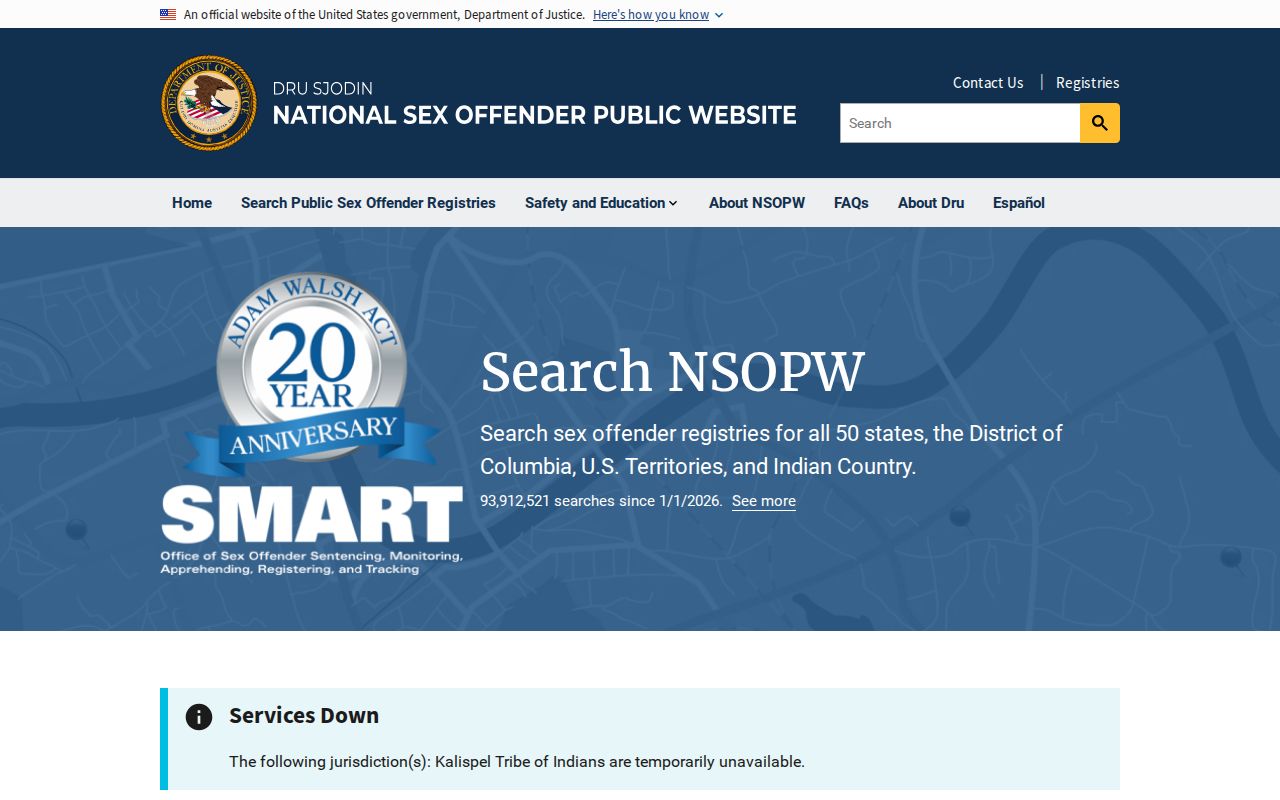
The national interface broadens reach, but the contributing jurisdiction still controls the underlying profile and any correction.
NSOPW does not replace the DPS registry for Texas detail. Open the Texas source record when a national result points back to this state. Then verify the status with the correct city police department or the Fort Bend County Sheriff's Office. This layered check is especially useful after a move, when a national index and local update may not appear at the same time.
Note: Send a correction to the jurisdiction that supplied the profile because NSOPW does not independently edit a Texas registration record.
Using Registry Information Lawfully
Registry information supports personal and family safety, factual community awareness, and lawful planning. Texas community notification can include DPS publication and local notices required by Article 62.056. Verify a Fort Bend County match before sharing it. Use the profile’s public facts, preserve victim privacy, and let law enforcement address compliance questions.
A registry entry does not grant permission to threaten, harass, intimidate, trespass, damage property, or organize vigilantism. It also does not prove a new crime has occurred at the listed address. When the concern is urgent, call 911. For suspected noncompliance without an emergency, contact the appropriate municipal police department or FBCSO at 281-341-4665.
Registry misuse can be a crime: The DPS registry warns against threats, harassment, and misuse. Code of Criminal Procedure Chapter 62, including Article 62.005, limits the public data and protects victim identity. Use the record only for lawful safety and awareness, and never confront a registrant.
Good use is quiet and fact based. Save the official profile date, confirm the source agency, and report a specific concern through official channels. That approach protects the community while reducing the risk of harm caused by stale data or a mistaken identity.